
Every payment counts: Helping small businesses make digital payments work for them
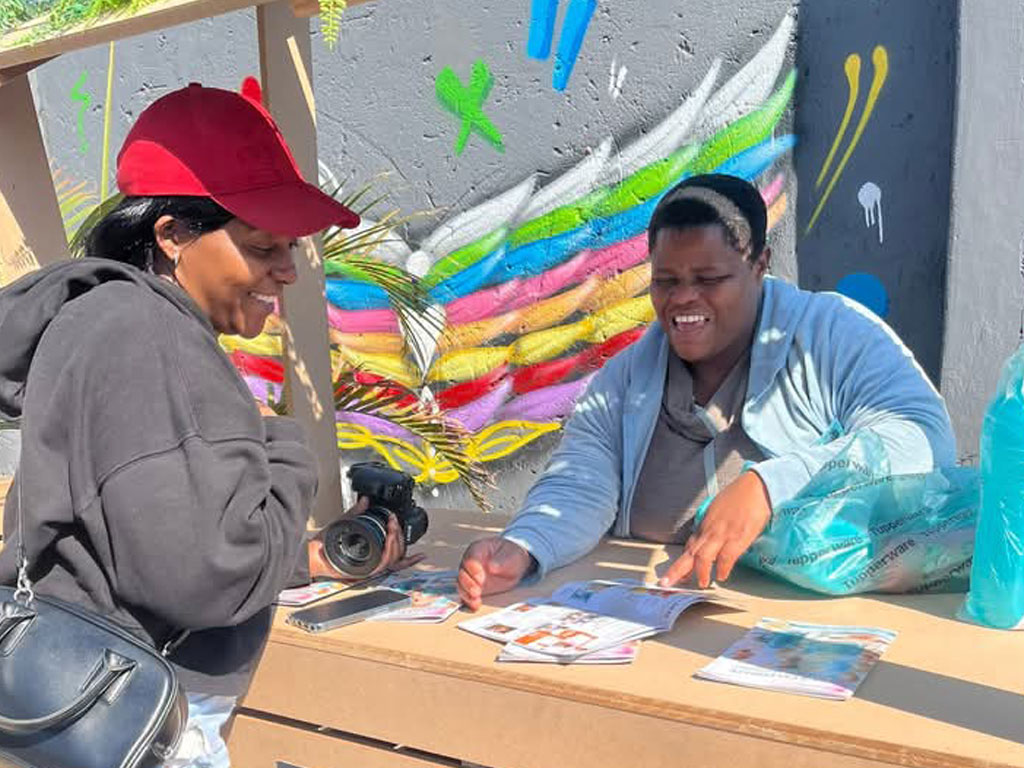
In Thembisa, our community liaison officer, Palesa Siwelani, is helping small business owners understand their digital payment options and how transaction records can support their businesses.
For a small business, a missed payment can mean a missed sale. A customer may be ready to buy, but if they do not have cash and the business cannot offer a suitable alternative, the transaction may not happen.
This is one of the practical challenges that community liaison Palesa encounters in her work with small businesses in Thembisa. Her approach starts with understanding how a business operates, identifying where support is needed and helping the owner explore options that make sense for them.
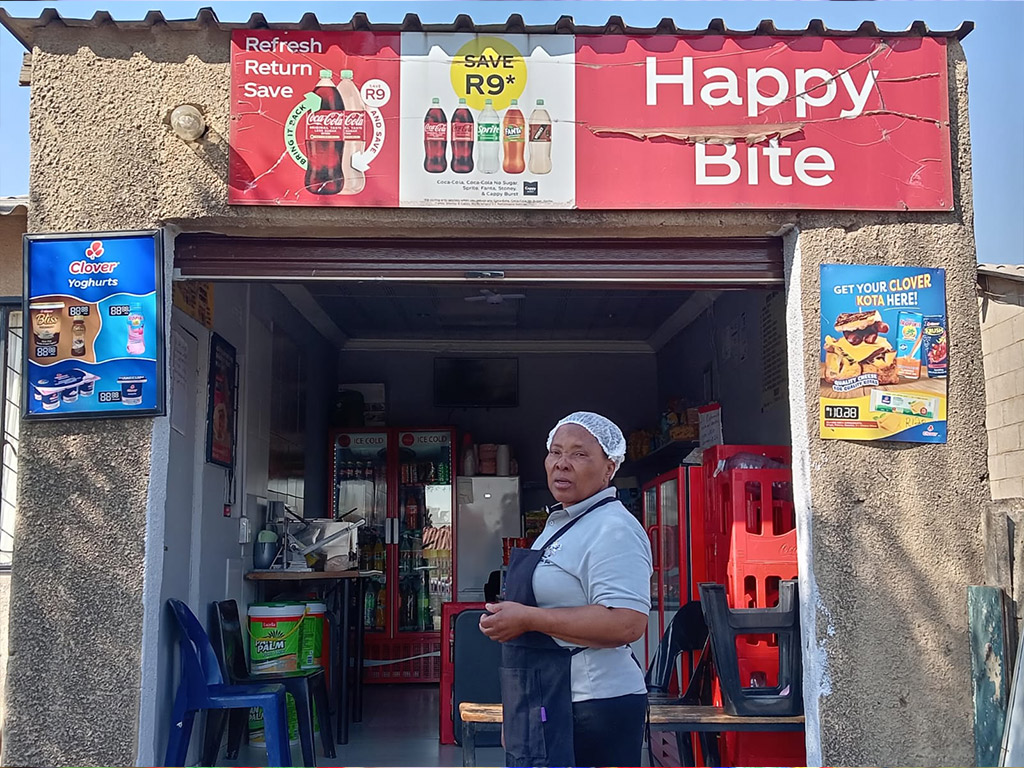
Her engagement with Kasi Food Court #37 is a case in point.
It started with a faulty payment device
Palesa first met the owner of Kasi Food Court #37 during a community walkabout. Nombuso Gwamanda, our community coordinator in Thembisa, introduced them and explained Palesa’s role in helping community members and businesses access and understand digital financial services.
The owner mentioned that she was having a problem with her point-of-sale (POS) device. Palesa returned the following day to help. It was through this initial interaction that she identified an opportunity to support the business.
“I realised that although the business had a business bank account, it was not fully utilising digital payment options,” Palesa explains.
The business relied mainly on cash, which could create difficulties when customers wanted to buy something but did not have cash available. For Palesa, the question was what other payment options the owner could use.
Making digital payments easier to understand
Palesa introduced the owner to PayShap, explaining how it works and how it could offer another way to receive payments.
The conversation revealed something interesting. The owner had already received a PayShap payment from a customer, but she had not known what the service was or how it worked.
“When I explained the service to her, she was excited to gain a better understanding of a payment method that had already been used in her business,” says Palesa.
The owner was also willing to share what she learnt with customers who were unfamiliar with PayShap.
For Palesa, this was encouraging. The engagement helped the owner understand her options while creating an opportunity for that knowledge to reach others in the community.
It illustrates an important point about digital financial inclusion: making a service available does not necessarily mean that people understand it or know how to use it. Practical guidance can help bridge that gap.
More ways to pay. Better business records.
Since the engagement, the owner has adopted several digital payment methods, including PayShap, a Yoco POS machine and Capitec transfers.
The additional options give customers greater flexibility when paying for their purchases. The owner told Palesa she can now serve customers who don't carry cash, reducing the chance of missing a sale because of limited payment options.
There is another benefit. Digital transactions create records that can help the owner track daily income and better understand the money coming into the business.
“She has also highlighted the value of digital transaction records in helping her track daily business income and better understand the money coming into the business,” says Palesa.
The owner has not yet applied for funding, but she recognises that keeping bank statements and transaction records may help her demonstrate her business income when the need arises.
This is worth understanding in context. Digital payments do not guarantee access to credit, and a transaction record alone will not determine whether a business qualifies for finance. But having a clearer record of business activity can be a useful starting point when engaging with financial service providers.
Start with the business, not the technology
For Palesa, the experience has reinforced the value of working directly with business owners and understanding the challenges they face.
“The main gap I identified was that, despite having a business bank account, the owner had limited information about the different digital payment options available and how to use them effectively,” she says.
A business may have a bank account and a payment device, but that doesn't necessarily mean the owner fully understands the other services that are available. The support needed is not necessarily another product. Sometimes, it starts with a conversation about what the owner already has, what isn't working, and what alternatives might help.
Palesa is also clear that digital payments come with practical considerations. Mobile data costs, network connectivity and transaction fees can affect whether these options are affordable and reliable for small traders.
“I have also learned that adopting digital payments does not mean that every challenge disappears,” she says.
Helping business owners understand both the benefits and the limitations allows them to make informed choices based on their circumstances.
From accepting payments to building a business record
Kasi Food Court #37’s experience shows what can happen when digital financial education meets a real business need.
The engagement began with a faulty POS device. It led to a conversation about PayShap, adopting additional payment options, and better understanding how transaction records can help the owner track business income.
These are practical steps, not an end result in themselves. The longer-term value will depend on how the owner uses these tools and whether the records she builds can support future business decisions.
For Palesa, the lesson is straightforward: “By helping business owners understand and adopt suitable digital payment options, we can support them in serving customers more conveniently, keeping better records of their income and preparing for future business opportunities.”
Digital payments are most useful when they respond to the realities of running a business. Community-level engagement helps make that connection, giving business owners the information they need to decide which options work for them.
Every payment counts. Every sale builds your story.